Tuesday, 27 May 2014

The Different types of Ethernet Cables

Ethernet is a set of protocols for LAN defined by the IEEE (Institute for Electrical and Electronic Engineers) 802.3 standards. Ethernet cables helps to transmit data using Ethernet protocol by connecting computer hardware devices together. Various types of Ethernet cables are available which are be indistinguishable by untrained eyes. Most of them look similar, but structural differences, the type of wire used, bundling style and connection structures in them makes the overall performance different. Selecting the right type of cable is an important decision to be made by consulting a good network cabling contractor.

The main types of Ethernet Cables:

Modern technology has developed different categories of Ethernet cables which differ in specifications like shielding from interference, speed of data transfer, and the bandwidth frequency range required to achieve that speed. The cable category will be clearly printed on the cables sheath from which its specifications can be identified. This guide describes some details about the cable types recognized as common industry standards. 
  • Category 3 Ethernet cables:It’s an older version of Ethernet cable that is limited to 10mbps speed and maximum frequency only up to 16MHz which makes it too slow for today’s computing requirements. It’s mostly used in Voice over Internet Protocol (VoIP) due to its slow transmission speed. This unshielded twisted pair cable was at the peak of its popularity in 1990’s. But after the invention of category 5 cables cat 3 cables fell out of favour. 
    Fig 1: Category 3 UTP Cable

  • Category 5 Ethernet cables:It completely replaced the Cat3 cables. Like Cat3 it’s also a UTP cable but has high data transfer rate than Cat3. A cat 5 cable allows up to 100mbps transfer speeds (Fast Ethernet) and is used as a voice cabling format. It is the most common type of Ethernet cable used since the mid 2000’s. The way of cable wrapping changed from Cat3 to Cat5 to reduce the amount of cable twists per foot in-order to reduce crosstalk and interference. In addition to Ethernet data, it can be also used in transferring telephone signals and video signals.
     
    Fig 2 : Comparison between Cat 5 and Cat 5e Cables

  • Category 5e Ethernet cables:It’s an enhanced version of Cat 5 cable, which can give up to 1000mbps data transfer speed. This high level of speed is referred as ‘Gigabit Ethernet’. It’s well suited for both home and business needs. It has become the most widely used Ethernet cable available in the market. Cat 5e components were designed with high speed Gigabit Ethernet in mind. Cat 5e cables have completely replaced Cat 5 cables in the new installations. Cat 5 and 5e differs in all aspects of performance like frequency, attenuation, capacitance etc. Both Cat 5 and 5e consists of four twisted pairs of wires. While Cat 5 cables utilizes only 2 pairs for Fast Ethernet, Cat5 e make use of all the four pairs of wires for enabling Gigabit Ethernet speeds. Due to its low cost and high performance, Cat 5e cables are now the most common type of cable sold in the market.
    Fig 3: Category 5e Normal UTP
    Fig 4 : Category 5e Shielded UTP

  • Category 6 Ethernet cables:It’s a cable standard designed for Gigabit Ethernet, which are made up of larger gauge wires, that work for 10/100/1000Mb Ethernet. The major difference between Cat 5e and Cat6 is in transmission performance. Cat 6 cables lack the popularity of Cat 5e style. Gigabit Ethernet speeds can be handled by Cat 5e cables, while Cat 6 cables are certified to handle Gigabit Ethernet with a bandwidth of 250 MHz. Cat 6 cables have high signal-to-noise ratio and so they can perform better in environments with high electromagnetic interference.
    Fig 5 : Category 6 Ethernet Cable
                                      
  • Category 6a Ethernet cables: It allows 10,000 Mbps data transmission rates and works for frequencies up to 500 MHz. The high frequency enables them to avoid alien cross-talk. Cat 6 cables are usually available in STP (Shielded Twisted Pair) form. It’s backward compatible with older versions like Cat 5e and Cat 6. 
    Fig 6 : Category 6a Ethernet Cable
  • Category 7 Ethernet cables:It’s a fully shielded cable that can support up to 10 Gbps (10000 Mbps) and frequency f up to 600 MHz. These types of cables consist of a Screened Shielded Twisted Pair (SSTP) of wires which makes them thicker, bulky and not easily bendable.
    Fig 7 : Category 7 Ethernet Cable
          The type of cable to be used in the network cabling should be selected based on your requirements, as there are many varieties of cables easily available all across. The selection of the right type of cable is more complex than connecting the cables and the devices. Consider the factors like the price and quality of cables, the number of equipments to be connected to the network and their performance, and the type of cable that will best work with the equipments. Selection of cheaper cables like Cat 5e can reduce the cabling installation expenses and selection of future-proof cables like Cat 7 can reduce the cabling maintenance expenses in future. 

Monday, 26 May 2014

Major 8 Ways to Manage Your Data Centre

Fig 1: An Overview of Data Centre
Most of the businesses nowadays use data centres for keeping confidential and important information. A data centre is actually a technique used to house computer systems and related components like telecommunication and storage systems. A data centre usually consists of redundant or backup power supplies, redundant data communication connections, environment controls, various other security devices, etc.

As businesses grow, the data centres are also becoming huge and more complex. As a result the management of data centres also become a tedious and time consuming task. An efficient data centre management strategy will help you to plan updates and schedule changes in line with your data centre’s build out.
There are a number of ways in which the data centre can be effectively managed.

Data Centre Management Methods

The data centre management is a set of processes which includes computer and server operations, data security, data entry, data quality control, etc. It also deals with the management of services and applications that are utilized for data processing. Various methods are available to efficiently maintain and manage data centre for every business.
   
    1.     Unified storage system
The Unified storage systems combine support for fibre channel, iSCSI, NFS and CIFS protocols in the same hardware to cut down costs and data centre management overheads.

    2.     Server Technology
Now the server technology is becoming a hot trend in concerned with the data centre management. Frequently changing server technology and trends are seems to be challenging for administrators. Hence the newer server technology and cost efficient methods should be adopted for data centre management. This helps you to keep up with the best data centre management practices. 
   
3.    
Data centre infrastructure management

The data centre infrastructure management is a separate and wider branch of management. The DCIM, Data Centre Infrastructure Management is an integration of IT and facility management disciplines to centralize monitoring, management and intelligent capacity planning of a data centre’s critical systems. DCIM supports common, real-time monitoring and management platform for all interdependent systems across IT and facility infrastructures. This is achieved through the implementation of specialized software, hardware and sensors.

Based on the type of implementation, the DCIM products can help data centre managers identify and eliminate sources of risk to improve availability of critical systems.

    4.     Ensuring Safety
A major thing to be considered while managing data centre is ensuring the safety of employees as well as data. Data centres sometimes contain numerous hazards that may adversely affect the life and health of technicians. The workers or technicians at the data centre should be properly aware about the potential safety hazards when performing maintenance activities.

    5.     Maintaining under-floor pressure
Managing a data centre also includes maintaining the under-floor pressure. To perform this, all the unnecessary openings in the raised floor should be sealed. There may be some common unmanaged openings such as structured cabling cut-outs under the cabinets, openings at building columns and gaps at perimeter building envelope, etc. Usually it is preferable to seal these areas because it will make the under-floor air pressure maintenance easier. It also helps in reducing the stress on mechanical systems.

    6.     Harness the BAS
Initially building automation systems are used only for monitoring purposes. Nowadays standard graphical user interfaces at the front end that display detailed system flows and equipment control diagrams. Latest BAS can communicate the important parameters of a data centre in real-time and at a high resolution, enabling the operator to fully visualize systems performance over any operating period. The processing speed, programming capabilities and response time of modern BAS (Building Automation Systems) offers more features and management efficiency.

    7.     Extend Energy efficiency to IT buying decisions
Information Technological equipments should be refreshed every two to three years. It should be done multiple times before planning major improvements for data centre infrastructure systems. Technology equipments are consuming the largest volume of power in the data centre and hence energy efficiency is becoming a critical factor in IT procurement decisions.

    8.     Server Virtualization concept
Server virtualizations is a software side concept which is used for increasing the utilization rates of a typical server to threefold and thus making the data centre more energy efficient. This energy efficiency is achieved by requiring a fewer servers overall to manage the same computing load. It helps to save more that 40% of energy.

The above mentioned factors are a fewer criteria to be considered while managing your own data centres. There are many more factors to be considered. For larger enterprises a number of technicians are classified into teams for managing various levels of data centre. 

The History of Network Cabling


In the early days, cabling for communication purposes where done without considering the future requirements. Networks in those days were very small with only some requirements and so no cabling or networking standards were followed then. As time went by, communication needs grew bigger and complex which compelled the vendors to create standards to provide interoperability. 

Digital Communication actually started with the invention of ‘Telegraph’ by Samuel Morse in 1844 using which he sent a message 37 miles away from Washington D.C. to Baltimore. Telegraph was invented using ‘Morse Code’ which is a language consisting of dots and dashes. The difference is that while the telegraph operators of the mid 19th century was able to transmit 4 or 5 dots and dashes in a second, our modern communication systems is now able to transfer at 1 Gigabit speeds or 1,000,000,000 separate 1’s and 0’s every second.

As the popularity of personal computers increased, the hardware parts for networking began to become standardized, particularly for cabling. The necessity of the need to communicate at higher speeds using computers led to the development of faster and faster networking equipments and higher specification cables and connectors.  

The first popular type of cable was a type of copper cable called the Coaxial cable which was soon replaced by another copper media cable called the Twisted Pair cable widely used in telephone lines. Demands for faster network connection with less noise led to modification of these twisted pairs. Vendors began to improve up on twisted pair cables by adding more number of twists, increasing the number of pairs, and protecting the cables by shielding with outer core. Modern type of twisted pair cables have 4 pairs and have more twists than compared to earlier types. The modern cables like CAT5, CAT5e and CAT6 have more quality and data handling capability than older cable versions and it also allows to have one cabling system to handle both voice and data communication needs.

The new trend in network cabling is the concept of structured cabling in which one wiring scheme is used for all voice, data and other services like video, multimedia, security, VoIP, PoE and wireless connections throughout the building or campus. It includes every networking device like cabling, equipments, connecting hardware, rooms for telecommunication, cable path ways, and even the jacks on the wall-plate in the building. A well structured cabling system can be considered as the life-blood of the organization which can serve for years if installed properly.

In the beginning of 1990’s the American National Standards Institute (ANSI) asked the Telecommunications Industry Association (TIA) and Electronic Industries Alliance (EIA) to propose a universal standard for the network cabling system. The already existing design created by AT&T was the most suitable solution for this issue. The networks of this system used the telephone distribution systems that were already installed in most office buildings. They used twisted pair cables as the main transmission medium and used star topology. The outcome of the commission work was published as the first specification for structured cabling in July 1991 which was referred to as ANSI/TIA/EIA 568. Later many new documents were published which defined the basic transmission requirements for Category 3, 4 and 5. As a result of the new high speed protocol development- the Gigabit Ethernet all the published standards where updated in 2000 and 2002.

IEEE (Institute of Electrical & electronics Engineers) released the 802.3 official Ethernet standard 10BASE-T in 1983. In 1985 IEEE 802.3a was released. It was known as Thin Ethernet or 10BASE-2. Since 1983, various different standards were introduced because of the increased bandwidth requirements. 

Thursday, 22 May 2014

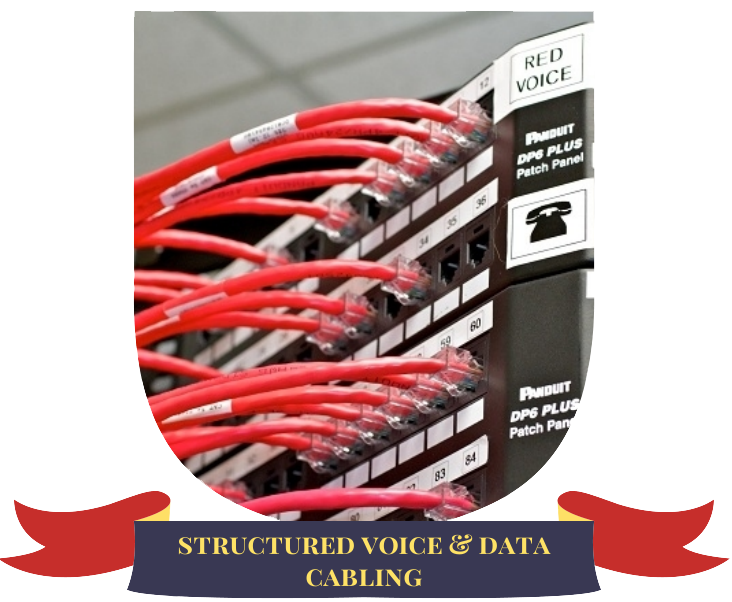
Follow Structured Voice & Data Cabling and Get Rid of your Slow Network Connection


          Structured cabling offers a cabling solution of assured quality and delivers high performance. Structured cabling systems are the core communication medium which is designed to grow with the business. It’s an area where decision makers should not skip to save a few dollars. Customers need quick response time in receiving services and so every company tries to increase their communication speed capacity. In such an environment, if the data centre manager is facing difficulties with a poorly designed cable infrastructure, the whole business processing will come to an end.

          Companies that are not using voice and data cabling system are missing a lot when it comes to their communication infrastructure. Voice and data cabling systems in an organization can be used to transmit different data’s like audios, videos, images, VoIP calls and other types of data. Installing a structured voice and data cabling system is easy. But maintaining them is a challenge. There are many structured cabling service providers who can help to install as well as maintain the structured cabling infrastructure.

Benefits of Structured Cabling over Traditional Cabling

  •   Structured cabling is capable of connecting up to 4 separate phone lines at each location while traditional wiring is only capable of only up to 1 to 2 separate phone lines. Structured cabling can provide high speed digital Internet connections such as ISDN or DSL lines. It can provide crystal clear voice connections and is expandable for use with commercial phone systems allowing features like call forwarding, conference calling, music-on-hold, intercom, speaker phone and much more. 

  •     Using traditional wiring local, cable and satellite television signals can be said as relatively clear. But the same signal reception in structured cabling is more enhanced. It allows cable modem connections and HDTV (High Definition Television) ready.  Along with that it allows enormous bandwidth to handle future channel releases. 

  •   Traditional wiring systems doesn’t allow data networks while structured cabling helps to connect the computers together in a network in the organization. It’s a perfect option for telecommuting. It can share the provided bandwidth among the devices connected in that network. Nowadays structured cabling systems can support up to gigabit (1000mbps) data transfer rates.

 Additional Benefits of Structured Cabling

  •  The system is consistent as same cables exist everywhere in the building.
  •     Any moves, adds and changes can be done easily as the company grows or moves to other locations.
  •   It can support future applications with minimal system upgrades.
  •   All the relevant locations in the building will have voice (telephone) outlets and TV/Video outlets.
  •   Structured cabling is a cost-effective and efficient (future-proof) way to wire the building when it’s under construction.
  •   Data’s like songs, photo or videos can be downloaded and stored centrally in a networked storage device which can prevent loss of data when the computer’s hard drive get corrupted.


       Structured network cabling is actually an infrastructure which can link multiple computers, telephones and other devices together. It’s a simple, future-proof and straight forward approach. It simplifies the office works by running everything off one system, making the office easier to manage. Latest software’s and hardware’s are supported by this network, and so it can be sure that in the few years’ time the network won’t get outdated. 

Tuesday, 20 May 2014

An Overview of Home Networks and its Installation Requirements

Fig 1: An overview of a simple Home Network

Home networks are established for personal purposes as well as for official purposes. Home networks are smaller compared to the organizational networks. A home network is a small local area network which is developed to facilitate communication and interoperability between various digital devices within the home.

Home networks usually rests on one or more of the networking equipments to establish connectivity of the physical layer, data link layer and the network layer among the devices and also between the devices and the external networks. The networking devices include the following;
  • Modem – It is provided by the ISP to expose an Ethernet interface to the WAN through their telecommunications infrastructure. In home networks they come in the form of DSL modem or cable modem.
  • Router – It is used to manage the network layer connectivity between a WAN and the HAN. The home networks mostly include a specific type of small, passively-cooled, table-top device having an integrated wireless access point and 4 port Ethernet switch. These kinds of devices tries to make the installation, configuration and management of home network automated, user friendly, and plug and play as possible.
  • Network switch – The network switch device is mainly used for enabling the home network devices communicate or talk with each other via Ethernet. Nowadays most of the home networks are satisfied with the Wi-Fi or the built-in switching capacity router.
  • Wireless Access Points – It is required for establishing connections with the wireless devices and the network. Most of the home networks are based up on one Wireless router combination device to carry out this role.
  • Network bridge – Used for connecting two network interfaces with each other. It is usually used to grant a wired only device to a wireless network medium.
Major things to be considered while setting up a home network

1. Decide the rooms or places you want to wire for your network.
2. Decide how many ports you want in each location
3. Select most apt location for connections and distributions.
4. Decide the paths through which the network cables should rake and run.
5. Decide the network speed you require.
6. Optimize the network capacity by reducing cost and complexity of connections.
7. Choose cables that are economically beneficial and enriched with high quality and capacity. 

Key Features a Home Network Should Posses

Selecting a networking topology for home networks mainly depends how effectively it can suits the needs of multiple services simultaneously. Following are some of the key features that a home network should possess.
  • Quality of service (QoS) – the ability of a home network to support quality of service is a major thing. It should be capable of supporting devices like VoIP, IPTV, File Transfer, Streaming media, etc. each of these devices needs various levels of QoS.
  • Multi-cast Support - IP multicast is actually a bandwidth conserving technology which cuts down traffic by continuously delivering a single stream of information to multiple receiving devices without any making any interruptions to other devices on the network.
  • High speed - The network should possess high speed. The bandwidth requirement is based on the applications that are used.
  • Low cost - Home networks should be highly economical. That is the network should be lower cost.
  • Ease of installation and maintenance - The home networks should be very simple to setup and for maintaining. 
Having a clear idea about these factors will help you to build up a reliable and flexible home network with an affordable cost. 


Monday, 19 May 2014

Voice and Data Cabling Services from Wireguys Canada

Things to be Kept in Mind While Designing Network Cabling Systems

Day by day communication is expanding in large volumes over networks. The backbone of the communication networks is the underlying communication channels. The communication channel is the medium through which the multimedia data are sent. Network cable is one of the major factors that pave the path of communication expansion. An important thing to be considered in installing and implementing network cables is its design strategy. The designing technique adopted for a network has great significance in the overall quality and the performance of the communication system.

Designing Techniques

The network cabling design techniques should be selected with proper care. Planning and pre- designing of the network cabling system will help you to foresee the network architecture and cabling layouts. Designing and installing communication cabling system that supports data, voice and video requires more time and effort because network cabling system should posses a long life. Choosing the best designing technique will help you to enhance the network standard. Various techniques are available nowadays.

Things to be kept in mind while designing a network cabling system

  • The type of cabling should be selected wisely. Always try to choose the latest cables such as Cat 5, Cat 5e, Cat 6 and Cat 7.
  • Latest technological cabling techniques such as fast Ethernet, ATM, 100 Base-T, FDDI, TP-PMD, etc should be adopted.
  • You should be aware of the specifications and the requirements for the various cables and cabling methods (such as UTP, STP, 10Base2, TP-PMD, Fast Ethernet and Fibre optic cables).
  • Analyse and study the existing telecommunication system characteristics and requirements.
  • Study about the limitation of the existing cabling and the network system.
Network Designing Methodologies

Initially we should learn how to design network cabling layouts that suits our requirements and how to use the available techniques.


Then we should consider the size of the communication network. Most of the organizations prefer to set up a small network with more features and resources. Small to Medium Sized businesses tend to establish a communication network of 100 to 500 employees with minimum cabling requirements and connections whereas large organizations may have networks with employees working in various branches in geographically distant locations. This needs to develop worldwide communication with thousands of uses.

Another thing to be noted is the framework of the network cabling and system you want to set up. There are some measures on which the network cabling and communication system should be build up on. They consist of communication network load, throughput, resource sharing capability, simultaneous bidirectional transmission of multimedia data, consistency and reliability of cabling, bandwidth utilization, latency and high security, etc.

Considering these things will help to you to design your network communication system and cabling structure more accurately and efficiently.